The AI Revolution: Promise and Peril
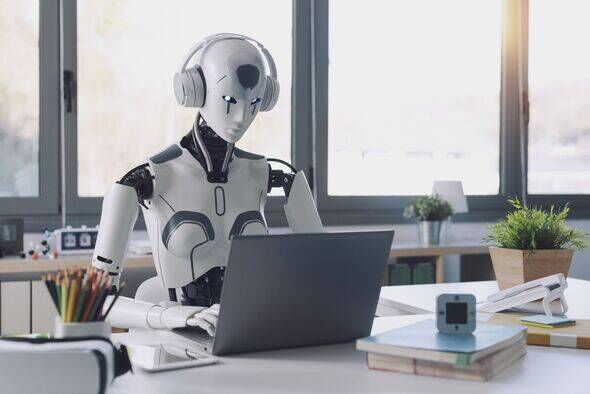
Artificial Intelligence (AI) is no longer the technology of the future—it’s the defining force of the present. From classrooms to corporate offices, AI is rapidly transforming how we learn, work, and live. While it promises efficiency and innovation, it also brings an unsettling reality: the automation of millions of jobs.
Recently, OpenAI—the creator of the world’s most popular chatbot—confirmed that AI could replace up to 44 job categories in the near future. According to their analysis, machine intelligence is now outperforming humans in several professional domains, from clerical work to sales management and even journalism.
How the Study Was Conducted
OpenAI researchers used a model known as the GDPval Test to evaluate how AI performs compared to professionals across nine major U.S. financial industries. They analyzed both human and AI-generated outputs to assess accuracy, efficiency, and decision-making quality.
The results were sobering. In some roles, AI not only matched human expertise but outperformed professionals by wide margins, signaling a seismic shift in the global labor market.
AI vs. Human Performance: The Results
AI’s success rate compared to human workers in various roles:
- Counter and Rental Clerks: 81%
- Sales Managers: 79%
- Shipping and Inventory Clerks: 76%
- Editors: 75%
- Software Developers: 70%
- Private Investigators: 70%
- Compliance Officers: 69%
- Supervisors and Managers: 67-69%
In total, the research identified 44 specific professions where AI is poised to overtake human capabilities, either fully or partially.
The 44 Jobs Most at Risk from AI
Here’s a snapshot of professions with the highest replacement potential, according to OpenAI’s findings:
- Counter and Rental Clerks – 81%
- Sales Managers – 79%
- Shipping & Inventory Clerks – 76%
- Editors – 75%
- Software Developers – 70%
- Private Detectives – 70%
- Compliance Officers – 69%
- Supervisors (Non-Retail) – 69%
- Wholesale & Manufacturing Sales Reps – 68%
- General Operations Managers – 67%
- Medical and Health Service Managers – 65%
- Personal Financial Advisors – 64%
- Administrative Managers – 62%
- Customer Service Representatives – 59%
- Production Supervisors – 58%
- Nurses and Practitioners – 56%
- Real Estate Brokers – 54%
- Journalists and News Analysts – 53%
- IT Managers – 52%
- Police Supervisors – 49%
- Lawyers – 46%
- Accountants and Auditors – 24%
- Mechanical Engineers – 23%
- Film & Video Editors – 17%
(Full list available in OpenAI’s report.)
What Industry Leaders Are Saying
OpenAI CEO Sam Altman recently warned that AI could fundamentally change the nature of work within the next few years. He predicted that 30–40% of existing jobs may be automated, as AI systems become capable of performing repetitive, analytical, and even creative tasks more efficiently than humans.
According to Altman, the key challenge isn’t just the loss of jobs—but the speed of transformation. The global workforce may not have enough time to reskill before automation takes over.
A Shift Toward AI-Driven Skills
Experts agree that the only way to stay relevant in the AI era is to adapt and upskill. Individuals equipped with AI literacy—data analysis, prompt engineering, automation tools, and ethical AI understanding—will have a competitive edge in the job market.
Training programs and AI career workshops (like those offered by NBT AI and others) are now focusing on teaching AI-assisted productivity rather than resisting automation. The message is clear:
“AI won’t replace you, but someone using AI will.”
The Human Edge: Creativity, Empathy, and Ethics
Despite the wave of automation, certain human traits remain irreplaceable. Jobs requiring emotional intelligence, ethical reasoning, creativity, and interpersonal communication are less likely to be automated in the near future. Professions in healthcare, education, leadership, and design may evolve—but not disappear.
AI can analyze data faster than any human, but it cannot yet replicate human purpose—the ability to create meaning, context, and moral judgment.
Conclusion: Preparing for an AI-Integrated Future
The rise of AI doesn’t necessarily signal mass unemployment—it signals mass transformation. As automation handles routine work, humans must shift toward higher-value roles that demand creativity, strategy, and emotional intelligence.
The key takeaway:
- Embrace AI, don’t fear it.
- Learn AI tools and ethics.
- Continuously upskill to stay ahead.
The future of work isn’t man versus machine—it’s man with machine.
Tags: ArtificialIntelligence, Automation, JobLoss, OpenAI, AIImpact, WorkforceTrends, FutureOfWork, CareerGrowth, ArtificialIntelligence, Automation, AIImpact, JobLoss, OpenAI, FutureOfWork, TechnologyTrends, CareerSkills, Reskilling, WorkforceTransformation
About The Author